Services

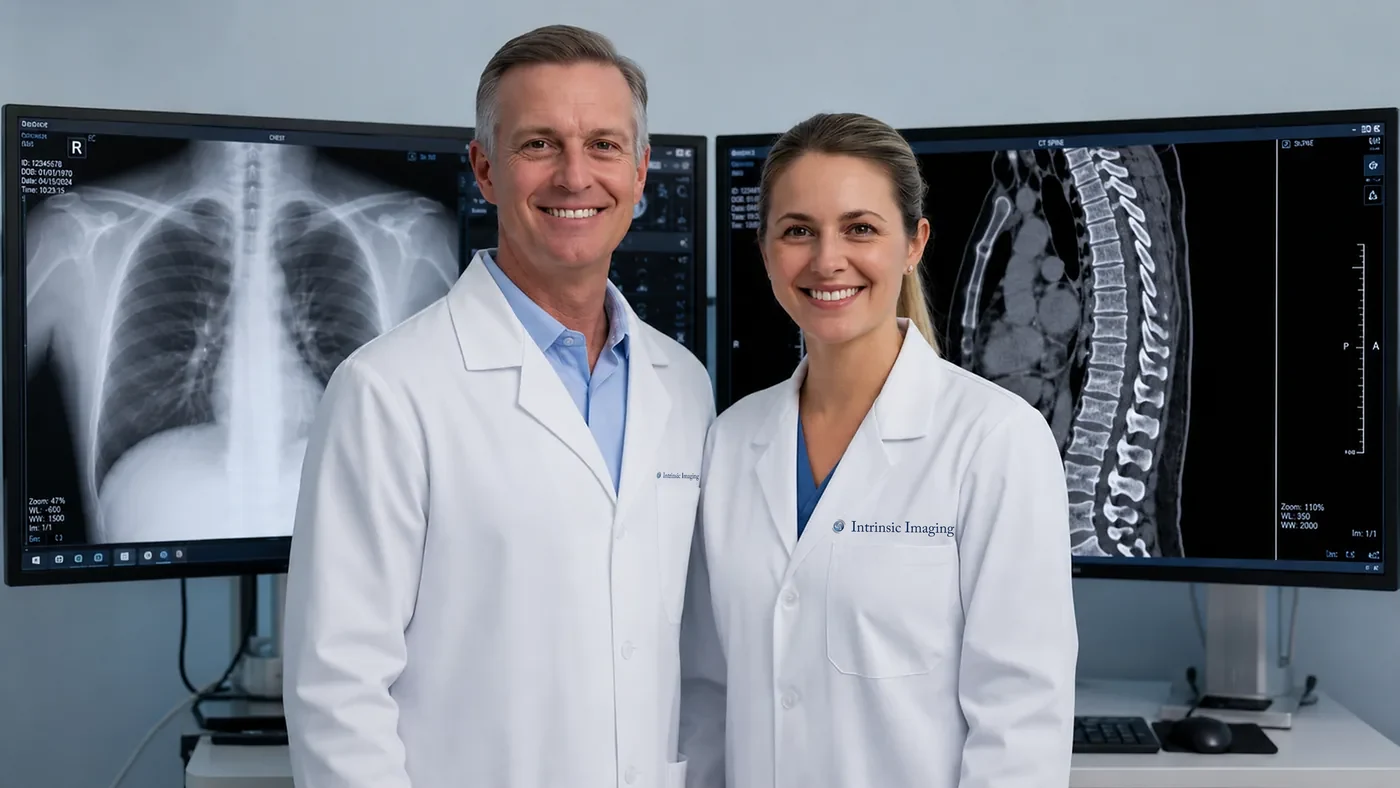
Modern imaging core lab with multiple reading workstations

Clinical Trial Imaging Services

As an ISO Certified Imaging Core Lab, Intrinsic Imaging provides comprehensive medical imaging core lab services to support Phase I–IV pharmaceutical, biotechnology, medical device, and AI-driven clinical trials.

Our team supports sponsors with imaging protocol and imaging charter development, site qualification and training, centralized image collection and quality control, blinded independent central review (BICR), endpoint adjudication, and quantitative image analysis across a broad range of imaging modalities and therapeutic areas.

With experienced subspecialty radiologists, robust operational workflows, and deep regulatory expertise, we help ensure imaging consistency, data integrity, and reliable efficacy and safety assessments throughout the clinical trial process.

Every service is built around your imaging endpoints. We define each imaging biomarker in the charter, standardize how it is acquired at every site, and measure it the same way at every timepoint — so primary and secondary imaging endpoints hold up to regulatory review.

Our clinical trial imaging technology connects secure image intake, protocol-based quality control, blinded central review and final data delivery within one controlled workflow.

Imaging Operations

“In clinical imaging, credibility is earned in details few ever see: a scanner qualified to exacting standards, a read held to the same benchmark at every site. Our discipline ensures sponsors never question their data.”

Heekwan Lee, Senior Vice President, Imaging Operations

Protocol & Charter Design

Imaging protocol development, charter authoring, and endpoint definition aligned to regulatory expectations.

Site Qualification & Training

Equipment surveys, scanner validation, technologist training, and site certification across global networks.

Image Acquisition Standardization

Acquisition guidelines, phantom QC, and ongoing site monitoring to ensure data consistency across sites.

Independent Central Reads

Blinded independent reviews with single, double, and triple-read paradigms by subspecialty experts.

Imaging Data Management

Imaging data reconciliation, adjudication workflows, and 21 CFR Part 11 compliant data delivery.

Medical Device Trials

Imaging endpoint support for Class I, II, and III medical device trials, including 510(k), De Novo, and PMA submissions.

Phase I–IV Clinical Trials

End-to-end imaging support from first-in-human through post-market, across all therapeutic areas.

Regulatory Submission Support

FDA, EMA, PMDA submission packages with audit-ready documentation and traceability.

Study Rescue & Core Lab Transfer

Is your current core lab missing read timelines or losing readers? We transfer image archives, harmonize your imaging charter and mobilize subspecialty readers so your trial keeps moving.

Rescue my study

How a trial runs with us

The Imaging Core Lab Trial Lifecycle

Stage 1: Protocol & Imaging Charter

We author the imaging charter and acquisition guidelines, define endpoints and response criteria, and align the read design with regulatory expectations before the first subject is scanned.

  • Protocol & Imaging Charter: We author the imaging charter and acquisition guidelines, define endpoints and response criteria, and align the read design with regulatory expectations before the first subject is scanned.
  • Site Qualification & Training: Equipment surveys, scanner validation, phantom QC and technologist training standardize acquisition across every participating imaging center.
  • Image Transfer & Quality Control: Sites upload images securely. Each exam is de-identified and checked against the protocol, and queries are raised with the site quickly.
  • Blinded Independent Central Review: Subspecialty readers perform blinded single, double or triple reads, with adjudication when readers disagree, plus quantitative analysis where required.
  • Data Delivery & Regulatory Support: Validated imaging data transfers, central-review datasets and audit-ready documentation support your submission and any inspection that follows.
01

Independent Assessment

How Blinded Central Review Protects Your Imaging Endpoints

A controlled review pathway keeps image quality, independent interpretation and endpoint resolution connected—without compromising reader blinding.

Site Images

Protocol-defined acquisition and secure submission.

Intake & Quality Control

Identity, completeness and acquisition checks.

Reader A

Independent, blinded assessment.

Reader B

Independent, blinded assessment.

Assessment Comparison

Apply the charter’s concordance and discordance rules.

Adjudication When Required

Resolve qualifying discordance; concordant assessments proceed directly to reconciliation.

Endpoint Data

Reconciled assessments and traceable data delivery.

Illustrative dual-reader pathway. The imaging charter defines the reader model, blinding rules, discordance criteria and when adjudication is required.

How We Deliver Imaging Core Lab Services

A reliable imaging endpoint depends on a controlled chain of acquisition, transfer, review and analysis. Our study team defines responsibilities, deliverables and escalation paths at startup and tracks them through database lock.

Protocol, Imaging Charter and Data Planning

We translate the protocol into operational instructions: scan schedules, acquisition parameters, response criteria, reader access, adjudication triggers and missing-data rules. The imaging charter and image acquisition guidelines define how sites and readers work. We define imaging data fields and transfer formats with the sponsor’s data-management team.

Site Qualification, Scanner Checks and Phantom Testing

Qualification starts with equipment and software surveys, acquisition review and test submissions. Phantom testing assesses calibration and reproducibility where the quantitative method requires it. Technologists and other acquisition personnel receive study-specific training and feedback before enrollment, with documented requalification after relevant equipment or protocol changes.

Secure Image Receipt and Quality-Control Queries

Image intake checks subject and visit identifiers, de-identification, required sequences, coverage and technical suitability. DICOM metadata and visible image content are reviewed for identifiers as appropriate. Missing, rejected and non-evaluable examinations are tracked separately, and queries are routed to the responsible site with documented resolution.

Quality-control and read turnaround expectations are agreed for each study. Operational tracking covers overdue scans, open queries, repeat submissions and upcoming assessments, allowing the sponsor and core lab to prioritize issues before they affect endpoint completeness.

Central Review, Quantitative Analysis and Reader Oversight

Qualified subspecialty readers perform independent assessments under prespecified blinding rules. Quantitative workflows include segmentation, volumetry, perfusion, diffusion, molecular imaging and radiomics where required. Calibration, agreement monitoring and adjudication support consistent interpretation without replacing the original reader record.

Decentralized and Hybrid Trial Imaging

Decentralized and hybrid designs move imaging closer to participants, often to community hospitals, regional imaging centers and satellite sites unfamiliar with research protocols. We qualify these facilities remotely through equipment surveys, test submissions and virtual technologist training, so a local scanner can contribute to the same endpoint as an academic center.

Secure cloud-based upload lets any qualified facility submit images directly, without courier shipments or site-installed software. Where a protocol uses portable or point-of-care modalities, such as ultrasound, acquisition instructions and quality checks are defined for that equipment. Consistent central quality control and blinded review keep results comparable regardless of where the participant was scanned.

Data Reconciliation, Delivery and Inspection Support

We reconcile the expected imaging schedule against received images and completed reads, resolve outstanding discrepancies and apply documented database-lock criteria. Transfers include endpoint values, quality flags and adjudication outcomes using agreed specifications. Charter versions, training records, query history and audit trails support sponsor review and regulatory questions.

Endpoints we read

Modalities & Response Criteria Matrix

We support established and protocol-specific criteria. Imaging, endoscopy, tissue and functional assessments use distinct methods selected for your endpoints.

Therapeutic areaModalitiesResponse criteria & endpoints
OncologyCT, MRI, PET/CT, bone scan
RECIST 1.1iRECISTmRECISTRANOLuganoPCWG3PERCISTChoi
CardiovascularEchocardiography, cardiac MRI, CT angiography, IVUS
LVEFStrain imagingPlaque volumeValvular regurgitation grading
Central Nervous SystemMRI, amyloid & tau PET, DaT-SPECT, CT/CTA
MS lesion burdenVolumetric MRIHippocampal volumetryAmyloid/Tau PETARIA-E/ARIA-HASPECTS
MusculoskeletalX-ray, MRI, DXA, QCT
Sharp/van der HeijdeRAMRISMOAKSWORMSKellgren-LawrenceBone mineral density
GastroenterologyEndoscopy, MR enterography, MRI-PDFF, elastography; separate histopathology
SES-CDMayo endoscopic subscoreUCEISMaRIALiver fat/stiffnessRobarts Histopathology Index
OphthalmologyOCT, fundus photography, fluorescein angiography
Central subfield thicknessGeographic atrophy areaDR severity grading

No reader bottlenecks

Turnaround Time & Reader Redundancy

Deep reader bench

With 750+ credentialed physicians, reads are balanced across qualified readers, so a trial never depends on one person.

Agreed turnaround times

Standard and expedited read turnaround times are agreed with you up front and tracked throughout the study.

Discrepancy & adjudication workflows

Reader disagreements are flagged and sent to an independent adjudicator, with full traceability.

Featured Case Study

Intrinsic Imaging

Oncology

Fast-Track Rare Disease Oncology Trial

  • 40 sites in 14 countries
  • Fewer than 3 patients per site
  • Priority Review program

Challenge

Registration trials in rare diseases operate under unforgiving constraints. With fewer than three patients per site spread across 40 sites in 14 countries, every imaging timepoint carried outsized weight, and any delay in central review directly threatened enrollment momentum. The sponsor's Priority Review designation compressed timelines further, requiring a core lab capable of rapid startup and exceptionally responsive query handling without compromising the rigor of the imaging assessments.

Read the case study
View all case studies

Frequently Asked Questions

What do your imaging core lab services encompass?
Our services encompass imaging protocol and charter development, site qualification and training, acquisition standardization, secure image collection, quality control, independent central reads, adjudication and imaging data management. Scope is defined around the study’s imaging endpoints and delivery milestones.
How is blinded independent central review structured?
The imaging charter defines the assessment criteria, reader qualifications, blinding requirements and read paradigm. Subspecialty readers evaluate images independently, using single, double or triple-read designs and adjudication workflows selected to satisfy the protocol’s requirements.
How do you ensure imaging consistency across sites?
We establish protocol-specific acquisition guidelines, evaluate site equipment and train imaging personnel before activation. Central quality control then verifies incoming images for completeness and acquisition compliance, while documented queries resolve any issue that could affect endpoint assessment.
Can your services accommodate decentralized and hybrid trials?
Yes. Remote site qualification, site training and secure cloud image upload enable decentralized and hybrid trial models. Portable imaging workflows are evaluated against protocol requirements, equipment suitability and acquisition quality standards before use.
Which imaging data and documentation do sponsors receive?
Deliverables are agreed in the imaging charter and data transfer specifications. They may include reader assessments, quantitative imaging measurements, adjudicated results, reconciled imaging datasets and supporting documentation, with traceability from image receipt through final delivery.
Can we engage selected services rather than a full-service core lab?
Yes. Our scope may encompass a complete imaging workstream or discrete activities such as acquisition guidance, site qualification, quantitative analysis, independent reads or study transfer. Responsibilities and interfaces are documented at kickoff.
How are missing and non-evaluable scans managed?
We track them against the expected visit schedule, distinguish technical failures from missing examinations, and apply the protocol’s query and analysis rules. A scan is never designated evaluable merely to complete a dataset.

Tell us about your trial.

We'll scope imaging services tailored to your endpoints and timeline.

  • 3 FDA inspections

    Zero 483 observations

  • 5 BSI ISO certifications

    9001, 13485, 22301, 27001, 27018

  • 750+ physicians

    Board-certified, fellowship-trained